What to Include on Your Wedding Website: The Complete Checklist
Twelve things worth putting on your wedding website, what to leave off, and a checklist to run through before you share it.
You’ve booked your venue, set the date and started thinking about invitations. Now it’s time to create your wedding website.
But what exactly should you put on it?
A wedding website is one of the easiest ways to keep your guests informed, collect RSVPs and share all those little details that won’t fit on a traditional invitation.
And the best part? You don’t need to have every detail figured out before you get started.
Whether you’re planning a countryside wedding, a destination celebration or something a little closer to home, here’s everything worth including on your wedding website.
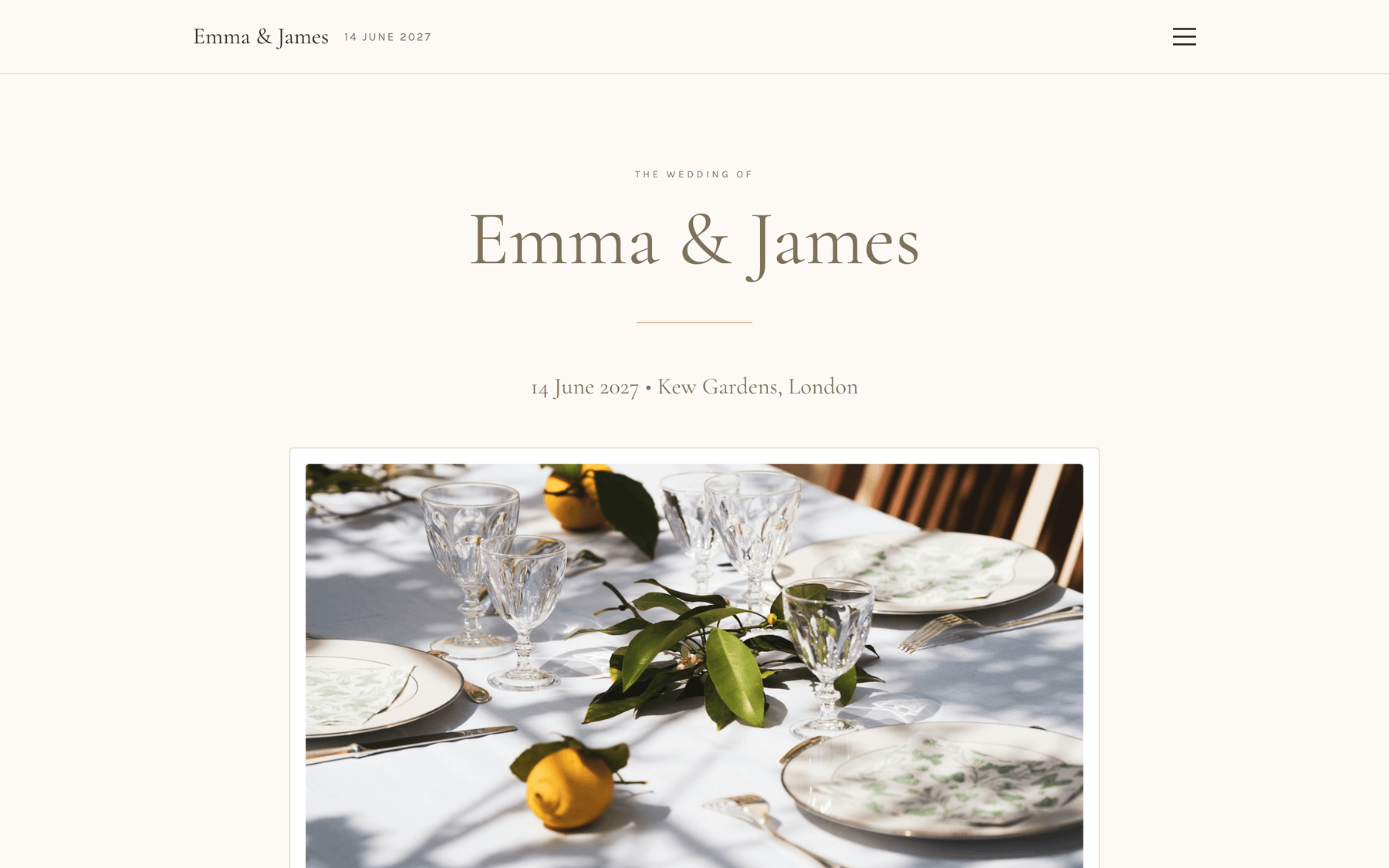
1. Your Names and Wedding Date
Let’s start with the obvious.
Your names and wedding date should be the first things guests see when they visit your website.
You might also want to include a short welcome message to make things feel a little more personal.
For example:
We’re getting married! We can’t wait to celebrate with all our favourite people. You’ll find everything you need to know about our big day right here.
Don’t worry about writing anything particularly formal. Your website should sound like you.
2. Your Wedding Venue and Location
One of the first questions guests will have is where they’re actually going.
Make sure your website includes:
- The full name and address of your wedding venue
- The postcode for sat navs
- Details of where the ceremony and reception will take place
- Parking information
- Any special directions guests might need
If your ceremony and reception are at different venues, make that clear and include both addresses.
A little tip: If your venue is tucked away down a country lane or has more than one entrance, include a note explaining exactly where guests should arrive.
It could save quite a few last-minute phone calls!
3. Your Wedding Day Schedule
Guests don’t need a minute-by-minute breakdown of your wedding, but they’ll appreciate knowing roughly how the day will unfold.
Consider including the key timings, such as:
- 1:00pm – Guests arrive
- 1:30pm – Wedding ceremony
- 2:15pm – Drinks reception
- 4:00pm – Wedding breakfast
- 7:00pm – Evening celebrations
- 11:30pm – Carriages
You can always update these timings as your plans come together.
And if you’re inviting evening guests separately, make sure they can clearly see when they’re expected to arrive.
4. An Online RSVP
If there’s one thing we’d recommend including on every wedding website, it’s an online RSVP.
Traditionally, couples would send out paper RSVP cards and wait for replies to arrive through the post.
These days, your guests can respond online in just a few moments.
An online RSVP can help you collect:
- Whether each guest can attend
- Menu choices
- Dietary requirements
- Other information you need from guests
It’s particularly useful when you’re managing a large guest list.
With NearlyWeds, your RSVPs are connected to your wedding guest list, so you can see who’s coming, who’s declined and who still needs to reply.
No chasing through messages or trying to remember who told you what.
5. Accommodation Recommendations
If guests are travelling from further afield, they’ll appreciate a few suggestions for somewhere to stay.
You don’t need to research every hotel in the area. A handful of good options is plenty.
Try including accommodation at different price points, along with approximate distances from your venue.
If your wedding venue has bedrooms available, mention those too.
And if you’ve arranged a special rate with a local hotel, your wedding website is the perfect place to share the booking details.
6. Travel and Transport Information
Getting to a wedding isn’t always straightforward, especially if your venue is somewhere rural.
Help your guests plan ahead by including information about:
- Nearby train stations
- Local taxi companies
- Parking arrangements
- Shuttle buses or organised transport
- Recommended routes to the venue
If taxis are difficult to find in the area, it’s worth mentioning that guests should book in advance.
For destination weddings, you might also want to include nearby airports, transfer options and car hire recommendations.
7. Your Dress Code
Black tie? Formal? Garden party? Or simply whatever makes your guests feel comfortable?
Whatever you’ve decided, make it clear on your website.
You don’t need to overcomplicate it.
For example:
Dress code: Formal. We’d love everyone to dress up for the occasion, but please wear whatever makes you feel your best.
Or, for a more relaxed celebration:
Dress code: Smart casual. We’ll be celebrating outdoors, so comfortable shoes are recommended!
If you’re getting married somewhere with uneven ground, grass or gravel, a quick heads-up about footwear is always appreciated.
8. Your Story
This is where your wedding website becomes a little more personal.
Your story doesn’t need to be a lengthy account of your entire relationship.
You could share how you met, where you went on your first date, how the proposal happened or simply a few words about what you’re looking forward to most.
Some couples love writing a detailed story. Others prefer a few photographs and a short introduction.
There’s no right or wrong approach.
For example:
It all started with a first date that was only supposed to last an hour. Seven years, countless adventures and one very memorable proposal later, we’re getting married!
Keep it natural, and don’t feel pressured to write something overly romantic if that’s not your style.
9. Wedding Gift Information
Guests may wonder whether you have a gift list, a honeymoon fund or would simply prefer no gifts at all.
Your wedding website gives you somewhere to explain your wishes without squeezing the information onto your invitations.
If you’re asking for contributions towards a honeymoon, you could write:
Having you celebrate with us is more than enough. But for anyone who has asked about gifts, we’d be incredibly grateful for a contribution towards our honeymoon.
If you’d prefer no gifts, it’s perfectly fine to say so.
The important thing is making guests feel comfortable, whatever they decide.
10. Frequently Asked Questions
You might be surprised how many questions guests have in the weeks leading up to a wedding.
Rather than answering the same messages repeatedly, create a little FAQ section.
Some useful questions to cover include:
- Can I bring a plus-one?: Explain whether invitations are limited to the named guests.
- Are children invited?: If you’re planning an adults-only celebration, let guests know politely and clearly.
- Is there parking at the venue?: Include any parking restrictions or instructions.
- What time should I arrive?: Let guests know when they should be seated before the ceremony.
- Can I take photographs during the ceremony?: If you’re having an unplugged ceremony, this is a good place to mention it.
- Is the wedding indoors or outdoors?: Particularly helpful for guests deciding what to wear.
A little information now can save you a lot of questions later.
11. Photographs of You Both
Your wedding website doesn’t need to be filled with professional engagement photographs.
A few favourite pictures from your time together can make it feel much more personal.
Think holiday snaps, photographs from memorable occasions or even a picture from your very first date.
Choose photographs that feel like you rather than worrying about making everything look perfectly polished.
And if you’d rather keep things minimal, a beautifully designed website with no photographs can look just as lovely.
12. Updates and Last-Minute Information
Wedding plans have a habit of changing.
Perhaps your ceremony time moves slightly, transport arrangements are confirmed or you’ve organised something extra for the following morning.
Instead of contacting every guest individually, you can update your wedding website with the latest information.
It’s worth reminding guests to check the website again as the big day approaches.
That way, everyone knows where to find the most up-to-date details.
What Should You Leave Off Your Wedding Website?
As useful as wedding websites are, you don’t need to include absolutely everything.
Avoid overwhelming guests with unnecessary information or sharing details that should remain private.
For example, there’s usually no reason to publish your full supplier list, wedding budget or detailed behind-the-scenes arrangements.
And if you’re including personal contact information or anything intended only for invited guests, think carefully about who can access your website.
The aim is to make things easier for your guests, not give them another lengthy document to read.
When Should You Create Your Wedding Website?
Ideally, start building your wedding website once you’ve confirmed your date and venue.
That doesn’t mean everything needs to be finished straight away.
You can begin with the essentials, share the website alongside your save the dates and gradually add more information as your wedding plans develop.
By the time your invitations go out, your website can be ready to collect RSVPs and answer guests’ most common questions.
And because everything is online, you can continue making changes right up until the wedding.
Your Wedding Website Checklist
Before sharing your website with guests, make sure you’ve covered the essentials.
- Your names and wedding date
- Venue name, address and directions
- Ceremony and reception timings
- Online RSVP
- Menu choices and dietary requirements
- Accommodation recommendations
- Travel and parking information
- Dress code
- Your story and photographs
- Gift information
- Frequently asked questions
- Any important updates for guests
You don’t have to include every single item. Think about what your guests will genuinely need to know and build from there.
Create Your Wedding Website for Free with NearlyWeds
Your wedding website should make planning easier, not give you another thing to worry about.
With NearlyWeds, you can create a beautiful wedding website, personalise it to suit your wedding and keep all your important guest information in one place.
From collecting RSVPs and managing your guest list to sharing travel details and organising your seating plan, everything works together.
And it’s free, always, with unlimited guests.
Ready to build yours?
Create your free wedding website, with your guest list, RSVPs, seating plan and budget alongside it.
Join Free